Eco-Friendly Compostable Preform & Bottle
As the world wakes up to the environmental crisis of plastic pollution, there has been a surge in demand for environmentally friendly, sustainable alternatives. One of the most exciting developments in this space is the introduction of the compostable preform and bottle—a groundbreaking form of green packaging that embraces functionality and environmental consciousness. In this blog, we’re going to delve into what compostable preforms and bottles are, why they are important, how they are distinctive from traditional plastic, and how companies such as Amnotplastic are helping to redefine what is possible in the packaging industry.
What Are Preforms and How Are They Used?
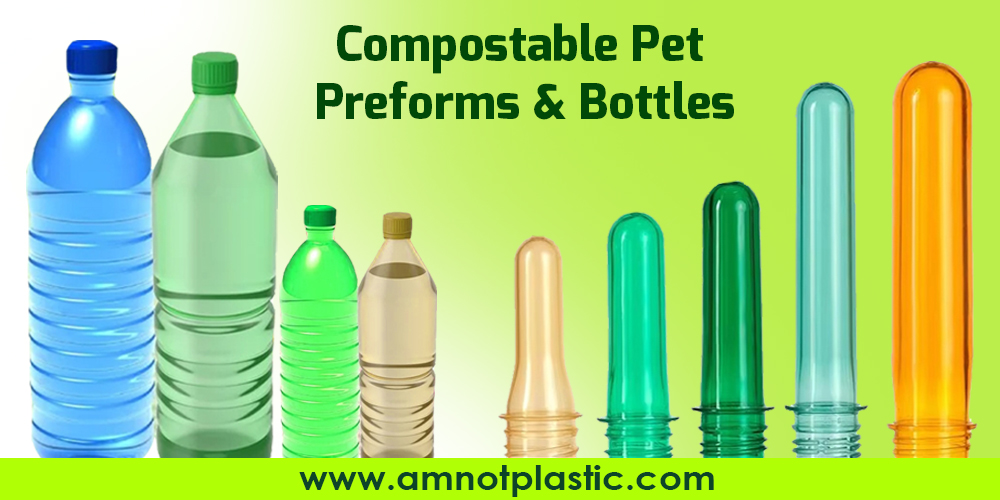
A preform is the first stage of a plastic bottle, which is typically in the shape of a thick test tube. These are created first and then blown into full-sized bottles by using heat and air in a blow molding machine. Preforms have many applications in the packaging of:
• Drinking water,
• Juices and other beverages,
• Personal care products, and
• Household cleaners.
Traditionally, preforms are made from PET (Polyethylene Terephthalate)— a form of petroleum-based plastic that, while recyclable, still adds to long term waste, pollution, and emissions to the atmosphere.
🌿 What Are Compostable Preforms & Bottles?
Compostable preforms are created with biopolymers—such as PLA (Polylactic Acid)—that are fully sourced from renewable agricultural resources like corn starch, sugarcanes, or cassava. When produced, the biopolymers are formed into a durable, clear, and light-weight preform, and then made into bottles via blow molder just like traditional plastic.
What is the difference?
The biopolymers will break down naturally into carbon dioxide, water, and biomass in an industrial composting facility 90-180 days after production—with no toxic residue or micro plastics. Once molded into bottles, these compostable bottles can be substituted for plastic bottles in all of the same industries and functions, doing exactly the same job without any long term environmental consequences.
True Eco-friendly Compostable Preform & Bottle Benefits
- True Sustainability
These preforms are made to enable a circular economy. The bottles at the
end-of-life can be industrially composted to return to nutrient-rich soil,
instead of simply ending as waste. - Eco-Friendly Production
Compostable materials have far less carbon emissions when they are made compared to petroleum-based plastics, making the whole supply chain
environmentally responsible. - There are NO Micro plastics!
When compostable bottles break down, they don’t leave harmful micro plastics behind, like plastic bottles that other plastic bottles break down
into. In the right composting conditions, they fully disappear. - Helps Green your Brand
Transitioning to compostable preforms is a perfect show of ongoing sustainability efforts. More than ever, consumers are immediately identifying business from their green claims to sustainability. Industrial Uses for Compostable Bottles Compostable preforms and bottles may be used for:
• Beverage brands (water, juice, herbal drinks)
• Cosmetic packaging and personal care products
• Organic products
• Hospitality and events industry (single-use packaging)
They are functional, lightweight, and durable alternatives to PET bottle production, and will offer at least the same level of performance as PET plastic without the environmental costs.
� Amnotplastic’s Role in Sustainable Preform Production
Amnotplastic is one of several newer companies dedicated to sustainable, compostable preform and bottle solutions. They embrace a model which is not only innovative, but employs and empowers local communities in particular rural and SHG (Self-Help Group) women, to produce sustainably.
As their production capacities and new product innovations grow, Amnotplastic preforms support small and mid-range brands to switch to a greener packaging without compromising on quality. The Amnotplastic cultural transformation is not only about offering a new product but also a new culture around consumption choices.
⚠Compostable vs Biodegradable
️ What You Need to Know
Although the terms compostable and biodegradable are often confused and used interchangeably, significant differences exist: – Biodegradable refers to the property of a material decomposing after a certain amount of time; however, this decomposition may leave harmful residues behind – Compostable means that the material has wholly decomposed, regardless of time, into safe, non-harmful compost when properly disposed of. Always look for certified compostable standards (EN 13432 or ASTMD6400), in order to confirm true composability.
♻Barriers to Adoption (and Moving Forward)
️
Even with their benefits, compostable preforms and bottles have a few real life barriers to adoption: – In some regions there are limited composting infrastructures – First costs of production are higher than PET
– Little public knowledge
However, as awareness increases and legislation such as the Plastic Waste Management Rules in India come into place, the future looks bright. Companies such as Amnotplastic are filling these gaps by providing a trustable, scalable solution.
Conclusion:
Transitioning to eco-friendly compostable preform and bottle solutions are not a whim or fad, but an undeniable necessity for a planet inundated with plastic. With sustainable innovation, responsible manufacturing, and driven leadership in the industry, we can redefine how packaging interacts with our Earth.
As more and more consumers and businesses adopt compostable solutions, we will be closer to achieving the vision of a plastic-free, circular economy.
Let’s get started.